Kristian Prenga steps onto boxing's newest global stage with the kind of knockout danger that could spark a new era.
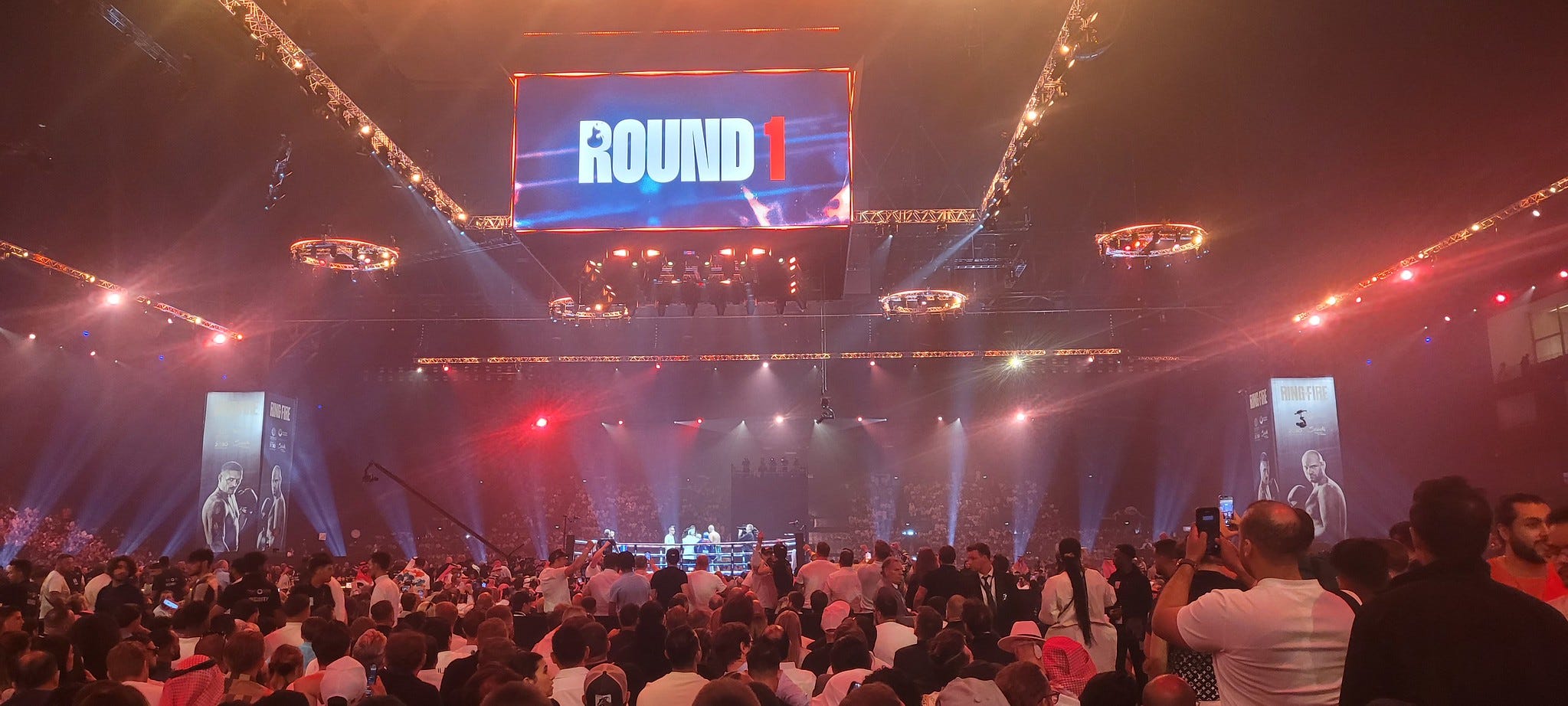
Saudi Arabia is turning elite boxing into a destination event — and Kristian Prenga may be exactly the kind of fighter who makes the dream a reality.
For years, boxing fans have had one complaint above all others: why don’t the biggest fighters just fight?
It sounds simple, because it should be simple. There are only so many top heavyweights in the world. They all know each other. Fans know the fights they want. The fighters know the fights fans want. Everybody knows. And yet somehow boxing has spent decades turning obvious matchups into complicated diplomatic negotiations.
Wrong promoter. Wrong network. Wrong belt.
Too much risk of one fighter’s star power snuffing out that of another equally as marketable.
Then Saudi Arabia showed up and asked the obvious question: what if we just made the fights big enough to happen?
That is the climate Kristian Prenga is walking into in Riyadh. He is not just stepping into a boxing ring. He is stepping into Saudi Arabia’s new global sports machine, a country trying to turn prestige sports into one of the great calling cards of Vision 2030.
Prenga is, in many ways, perfect for this moment. He is an Albanian heavyweight from New Jersey with a record that sounds almost too cinematic: 20 wins, all by knockout. He is not yet a household name. He is not yet a proven world champion. But that is part of the drama. Heavyweight boxing has always had room for the unknown puncher, the man with dangerous hands, the fighter who walks into a famous arena with one job: ruin the script.
Sports Illustrated recently framed the danger plainly. Eddie Hearn, while clearly confident about the matchup, acknowledged that Prenga can punch and that “everybody is dangerous.” That is boxing’s eternal truth. At heavyweight, there is no such thing as a harmless opponent. There are only opponents who have not landed clean yet.
But Saudi Arabia has figured out something boxing forgot. The fight itself is not the only product. The event is the product. The city is part of the product. The sense that something international is happening — that fighters, fans, money, media, celebrities, and curiosity are all converging in one place — is the product.
This is where Vision 2030 comes in. Saudi Arabia is trying to build a post-oil future that includes tourism, entertainment, culture, and sports. That can sound like dry government language until you see what it looks like in practice. It looks like Riyadh becoming a place where heavyweight boxing does not feel like an imported novelty, but part of a larger national project.
Saudi Vision 2030 materials describe sports, entertainment, tourism, and quality of life as part of the kingdom’s broader transformation strategy.
Boxing is uniquely suited to this kind of sports tourism. Golf needs courses, regular schedules, TV habits, and a loyal audience that returns week after week. Team sports require leagues, seasons, local loyalties, and years of culture-building. Boxing is different. Boxing can become the center of the world for one night.
One ring. Two fighters. One outcome.
In fact, Saudi Arabia may end up being better positioned in boxing than in some other sports. The kingdom does not need to recreate the entire boxing ecosystem from scratch. It needs to stage the nights people want to see. It needs to make the fight feel too important to miss. So far, the Kingdom has shown a real talent for that.
There has been a lot of talk recently about LIV Golf and whether Saudi Arabia is becoming more selective about where it puts its sports money. That is probably true. But that does not necessarily mean retreat. It may mean maturity. Every ambitious project eventually has to decide what works, what scales, and what actually supports the long-term goal.
Boxing works.
It gives Saudi Arabia global attention without requiring fans to learn a new format. It gives tourists a reason to fly in for a weekend. It gives Riyadh a glamorous night on the sports calendar. It gives fighters a stage big enough to change their lives.
Exciting new fighters like Kristian Prenga are the ultimate key.
He does not have to be the most famous man in boxing today. He only has to be dangerous enough to make people watch. In heavyweight boxing, fame can arrive very quickly. One punch can turn a regional name into an international headline.
One night in Riyadh could change everything.
It’s about time. People, everywhere, need someone, something — anything — to really root for again.
That is the old magic of boxing, and Saudi Arabia seems to understand it.
The sport needs fights that feel big. It needs fighters with real stakes. It needs stages that make people feel like something is happening.
Prenga has the power. Riyadh has the stage.
And that may be the formula.
Get ready: Kristian Prenga is scheduled to face Anthony Joshua in Riyadh on July 25 and lists Prenga’s record at 20–1, with all 20 wins by knockout. Sports Illustrated quoted Eddie Hearn’s assessment of Prenga as dangerous, while also noting that Joshua represents a major step up in class.
For longtime fans of boxing, this fight is shaping up to be one of the most exciting, most anticipated in decades.
(Contributing writer, Brooke Bell)